Politics
Oshiomhole Calls for Akpabio’s Resignation Over Proposed Senate Rule Changes

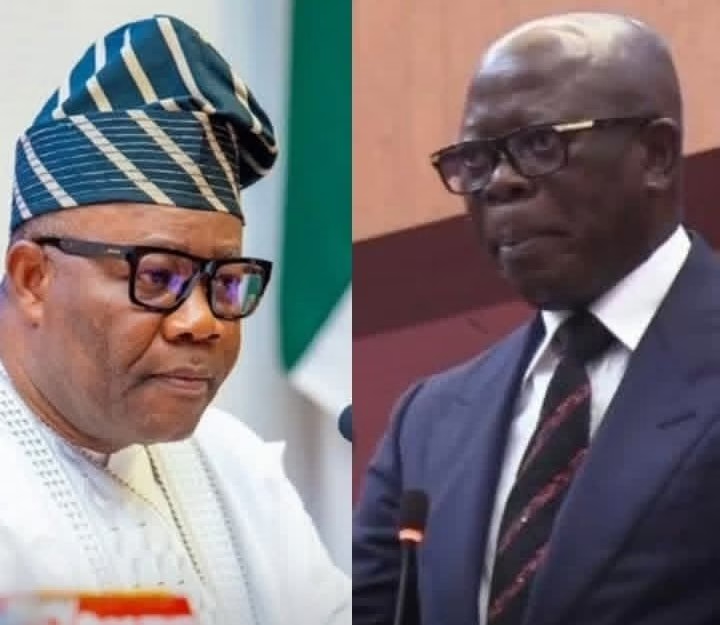

Former Edo State Governor and serving senator, Adams Oshiomhole, has called for the resignation of Senate President Godswill Akpabio over the proposed amendment to the Senate standing rules regarding eligibility for the office of Senate President.
Speaking during a heated Senate debate, Oshiomhole described the proposed amendment as a “serious moral crisis,” arguing that Akpabio himself benefited from the existing rules when he emerged as a principal officer shortly after entering the Senate.
According to Oshiomhole, Akpabio became Minority Leader during his first term in the Senate and later rose to become Senate President under the current rules. He argued that changing the requirements now to mandate eight consecutive years in office before one can contest for Senate President would be unfair and self-serving.
The senator further maintained that Akpabio has not personally spent up to eight years in the Senate, stating that if such a rule were adopted, the Senate President should “lead by example” by vacating the position for not meeting the proposed qualification.
Oshiomhole also defended the existing Senate rules, noting that former Senate President David Mark served for eight years without altering the regulations to favour himself.
He questioned the rationale behind changing rules that had previously allowed both David Mark and Akpabio to emerge as Senate leaders, insisting that laws should not be tailored to benefit specific individuals or restrict competition.
The senator suggested that the proposed amendment may be aimed at narrowing the pool of eligible candidates ahead of future Senate leadership contests, especially after the zoning arrangement in the current Senate produced limited contenders from the South-South region.
Oshiomhole, however, declared that he was not intimidated by political pressure, insisting that he would continue to speak openly on issues affecting the integrity of the Senate.
The debate over the proposed amendment has sparked wider political discussions about internal democracy, leadership succession, and the independence of Nigeria’s legislative institution.
Follow BONA NAIJA for more