SDGs Stories
Indigenous, Feminist Groups Demand Rights-Based Energy Transition at Colombia Conference

ndigenous Peoples and feminist movements have issued a strong call for a rights-based, inclusive energy transition as global leaders convene for the First International Conference on the Just Transition Away from Fossil Fuels in Santa Marta, Colombia.
In a joint position shaped by global consultations and frontline experiences, Indigenous leaders emphasized their status as rights-holders and custodians of lands, waters, and biodiversity. They insisted that climate and economic justice cannot be achieved without respecting their right to self-determination, as well as Free, Prior and Informed Consent (FPIC) and legal protections for their territories.
They warned that any transition strategy that overlooks these principles risks repeating historical injustices under the guise of green development.
Feminist organizations, including Shine Collab, echoed these concerns, advancing an eco-feminist vision that challenges entrenched systems of patriarchy, colonialism, and extractivism. According to the groups, transitioning away from fossil fuels must go beyond replacing energy sources and instead address structural inequalities within global economic systems.
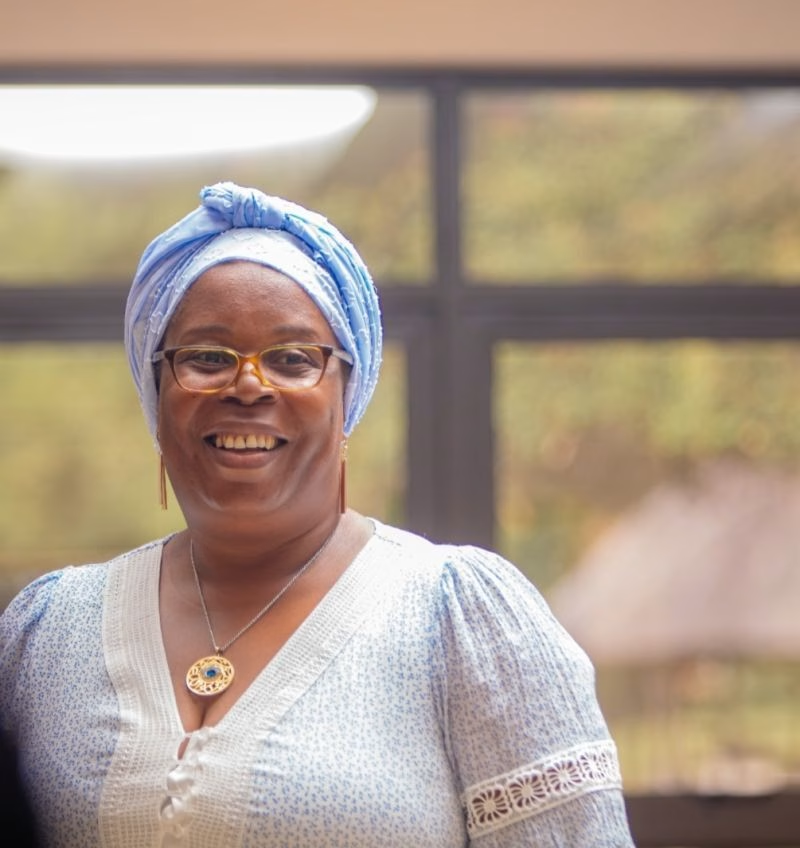
“There is no justice in a transition that replicates dispossession under a green label,” said Dr. Mela Chiponda of Shine Collab.
“We must transform systems of power and ensure affected communities are leading the process.”
Across the Global South, concerns are mounting over “green extractivism,” particularly the expansion of mining for critical minerals used in renewable technologies.
Indigenous representatives say such activities, often carried out without community consent, risk causing environmental harm, land dispossession, and cultural disruption similar to fossil fuel extraction.
Feminist advocates added that these impacts disproportionately affect women, increasing care burdens, reducing livelihoods, and heightening exposure to violence.
In Zimbabwe’s Bikita district, these challenges are already visible. Rising lithium mining activities have intensified pressure on land rights and local governance.
In response, Shine Collab and partners launched the Hanyanya Solar Project, a community-led renewable energy initiative that empowers women with access to clean energy while strengthening their knowledge of land rights and advocacy.
The initiative is being highlighted as a model for equitable energy transition, demonstrating how community-led solutions can improve livelihoods while reinforcing local agency.
“The experience in Bikita shows that alternatives already exist,” Dr. Chiponda added. “When women lead, the transition becomes sustainable and just.”
At the core of the joint call is a demand for inclusive, gender-responsive decision-making, respect for Indigenous governance systems, and protection of lands and natural resources. The groups also rejected what they described as “false climate solutions,” including geoengineering and market mechanisms that commodify nature.
Instead, they advocated for decentralized, community-owned renewable energy systems that promote energy sovereignty and equitable access.
The statement further highlighted the importance of recognizing care work—largely carried out by women as central to sustainable societies, urging governments to support it through policy reforms and public investment.
Additionally, both Indigenous and feminist leaders called for direct climate financing to communities, bypassing restrictive intermediaries, and stressed the need for reparative justice to address historical harms caused by extractive industries.
Organizers of the Santa Marta conference noted that the gathering is intended to complement, not replace, formal global climate negotiations. Outcomes from the meeting are expected to inform discussions ahead of COP31 in November 2026.
As deliberations continue, the message from Indigenous and feminist groups remains clear: a just transition must be built from the ground up, centered on rights, equity, and community leadership not profit.
About Shine Collab
Shine Collab is a global feminist network that advances gender-just solutions at the intersection of energy access, climate resilience, and community power and supports women-led renewable energy initiatives.
Follow BONA NAIJA for more