Connect with us

News

Samoa Agreement: Documents signed by the FG strictly for Economic Development Not to ‘promotes’ LGBTQ rights – Ministry

Published

on

Bola Ahmed Tinubu
Share for social good

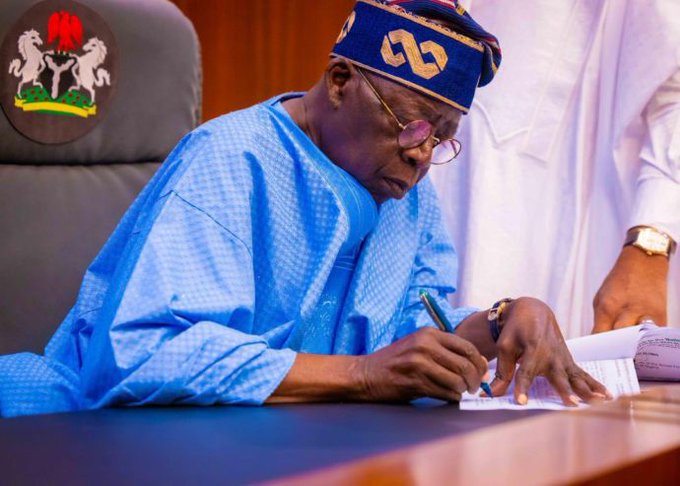
The Federal Government has signed the controversial Samoa Agreement, a move that has drawn criticism from various quarters, including civil society organizations and religious groups. The Minister of Budget and Economic Planning, Abubakar Atiku Bagudu, confirmed the signing of the agreement at a reception organized by the European Union in Abuja on July 1.

The Samoa Agreement, named after the Pacific Island Samoa where it was signed on November 15, 2023, has been touted as a means of promoting economic development in developing countries. However, opponents of the deal claim that it has some clauses that “compel” underdeveloped and developing nations to support the agitations by the Lesbian, Gay, Bisexual, Transgender, and Queer (LGBTQ) community.

According to the Minister’s media assistant, Bolaji Adebiyi, the documents signed by the federal government were strictly for economic development and did not mention LGBTQ or same-sex marriage even remotely. He insisted that what Bagudu signed was in relation to a $150 billion trade component.

FIRS

However, this has not assuaged the concerns of various groups who have rejected and condemned the move in its entirety. Some Islamic clerics have stated that the council would not welcome such an agreement, as it goes against the injunction of their Creator, Allah, and disrespects Nigeria’s sovereignty.

Others have called for the National Assembly to invite the Nigerian officials who signed the agreement to explain why they did so. The signing of the Samoa Agreement has been described as a celebration of perversity and a threat to Nigeria’s sovereignty and democracy.

The controversy surrounding the Samoa Agreement has sparked a heated debate in the country, with many calling for the government to rescind its decision. The Nigerian Police Force has also vowed to take necessary action against LGBTQ people seen in the viral video of the ‘Of Course’ challenge, stating that the LGBTQ activities and practices are unnatural offenses and are totally condemned in Nigeria.

As the debate rages on, it remains to be seen how the government will respond to the concerns of its citizens. One thing is certain, however – the Samoa Agreement has opened up a Pandora’s box, and the government must find a way to address the concerns of all parties involved.

Share for social good
CLICK TO GET A WhoGoHost Hosting PLAN
Continue Reading
Advertisement
Click to comment

Leave a Reply

Your email address will not be published. Required fields are marked *

This site uses Akismet to reduce spam. Learn how your comment data is processed.

News

Nigeria Bans Honorary Degree Holders from Using ‘Dr’ Title

Published

on

President Bola Ahmed Tinubu
Share for social good

The Federal Government has officially banned recipients of honorary degrees from using the “Dr” title as a prefix to their names, in a move aimed at curbing the misuse and politicisation of academic honours.

The directive was announced on Wednesday by the Minister of Education, Tunji Alausa, following a Federal Executive Council (FEC) meeting held at the Presidential Villa in Abuja.

Speaking to State House correspondents, Alausa expressed concern over what he described as the growing abuse of honorary doctorate awards across the country.

“The recent trend we’ve seen with the award of honorary degrees has revealed a growing abuse and politicisation of this academic privilege,” he said.
“We’ve seen awards being used for political patronage, for financial gain, as well as the conferral of awards on serving public officials, which, as part of the ethics of honorary degree awards, should not happen.”

New Directive Takes Effect

Under the new policy, individuals conferred with honorary doctorate degrees will no longer be allowed to use “Dr” as a prefix in any official, academic, or professional setting.

FIRS

Instead, recipients are required to clearly state the full honorary designation after their names—for example, John Doe, Honorary Doctor of Letters (D.Litt)—rather than adopting the “Dr” title.

The government clarified that only individuals who have earned doctoral degrees through academic study or are certified medical practitioners will retain the legal and professional right to use the “Dr” prefix.

Move to Restore Academic Integrity

The decision is part of broader efforts by the Federal Government to restore credibility and integrity to Nigeria’s education system, particularly in the awarding of honorary degrees.

Education stakeholders have long raised concerns over the proliferation of honorary doctorate awards, with some institutions accused of granting such honours without strict academic or ethical standards.

Observers say the new regulation is expected to discourage the commercialisation of honorary degrees and reinforce the distinction between earned academic qualifications and ceremonial recognitions.

Follow BONA NAIJA for more


Share for social good
CLICK TO GET A WhoGoHost Hosting PLAN
Continue Reading

Abuja

Mercedes G63 Kills Six Cows in Abuja Highway Crash

Published

on

Share for social good

A luxury Mercedes-Benz G-Class G63 AMG was involved in a late-night crash on a major highway in Abuja, killing six cows and sparking renewed concerns over road safety and enforcement of grazing laws in the Federal Capital Territory.
The incident occurred around 8 p.m. on Monday,

according to eyewitness accounts, when the high-speed SUV collided with a herd of cows that had reportedly strayed onto the roadway. A video circulating on social media shows the aftermath, with the white cows lying across the dark highway as traffic officials worked to manage the situation.


As of the time of filing this report, there were no confirmed injuries to the driver or any passengers in the vehicle. Unverified reports on social media suggested that the SUV sustained only minor damage despite the severity of the collision.


The accident has reignited debates over the continued presence of cattle on major roads in Abuja, despite the 2017 ban on open grazing introduced by the Federal Capital Territory Administration. The policy was designed to curb frequent clashes between herders and communities, as well as prevent traffic disruptions and accidents caused by roaming livestock.

FIRS


Residents and road users have repeatedly raised concerns about the enforcement of the grazing ban, noting that cows are still often seen along highways and within urban areas of the capital. Monday night’s crash is the latest in a series of such incidents, highlighting ongoing gaps in regulation and compliance.


Authorities are yet to release an official statement on the crash or confirm whether any action will be taken regarding the presence of the cattle on the highway.

WATCH VIDEO

Follow BONA NAIJA for more


Share for social good
CLICK TO GET A WhoGoHost Hosting PLAN
Continue Reading

Jobs

Job Vancancy: Moniepoint Job Vacancies in Abuja and North Central Nigeria

Published

on

Research Interviewers Job in Nigeria – Jhpiego Hiring Across 36 States & FCT
Share for social good

Leading Nigerian fintech company Moniepoint has announced six new job openings across Abuja and several states in the North Central region, expanding its workforce in compliance, technical operations, sales, and security management.

The vacancies cut across multiple departments, reflecting the company’s continued growth in agent banking, SME solutions, and digital financial infrastructure services.

Available Positions

Field Risk & Internal Control Officer (North Central)

  • Team: Compliance
  • Location: FCT, Nigeria
    The role focuses on monitoring operational risks, enforcing internal control standards, and ensuring compliance across field operations in the region.

Apply Here

Hardware Engineer

  • Team: Advanced Technical Operations
  • Location: FCT, Nigeria
    Successful candidates will handle hardware installation, maintenance, troubleshooting, and technical support for field operations.

Apply Here

FIRS

Implementation Officer (North Central)

  • Team: Moniebook Business Management Tools
  • Locations: Benue, Plateau, FCT
    This role involves onboarding merchants and ensuring smooth deployment of Moniepoint’s business tools across assigned regions.

Apply Here

Inbound Sales Officer (Abuja)

  • Team: Moniebook Business Management Tools
  • Location: FCT, Nigeria
    The position focuses on handling inbound customer inquiries, converting leads, and supporting sales growth for Moniepoint business solutions.

Apply Here

Regional Lead, Corporate Security (North)

  • Team: Moniepoint MFB
  • Locations: FCT, Kano
    The role oversees corporate security operations, risk prevention strategies, and protection of company assets across northern Nigeria.

Apply Here

Regional Lead, Field Risk & Internal Control (North)

  • Team: Compliance
  • Location: FCT, Nigeria
    This leadership position is responsible for coordinating regional risk management teams and strengthening internal control systems.

Apply Here

The hiring drive comes as fintech companies in Nigeria continue to expand their physical and digital operations across underserved regions, particularly in agent banking and SME support services.

Moniepoint, one of the fastest-growing fintech firms in the country, has steadily increased recruitment in technical, compliance, and field operations roles over the past year.

With these openings, Moniepoint is strengthening its presence in Abuja and northern Nigeria while scaling its financial services infrastructure across the country.

Follow BONA NAIJA for more


Share for social good
CLICK TO GET A WhoGoHost Hosting PLAN
Continue Reading

Business

Nigerians Slam Moniepoint CEO Over ‘Talent Quality’ Remarks Amid Hiring Debate

Published

on

Share for social good


Comments by Tosin Eniolorunda, CEO of Moniepoint, have sparked a heated debate online after he questioned the quality of Nigeria’s talent pool while discussing his company’s hiring challenges.


Speaking at the The Platform Nigeria on May 1, Eniolorunda said the fintech firm had advertised over 500 vacancies since 2024 but struggled to find qualified local candidates. He revealed that by 2025, the company reversed its local-only hiring policy due to the shortage.


I used to feel Nigerians are really bright… but we are still struggling to find Nigerians to fill those roles. They don’t meet global standards,” he said, attributing the gap to factors such as social media distractions, cybercrime, hookup culture, and weaknesses in the education system.

Backlash and Counterarguments


His remarks triggered swift backlash from Nigerians, particularly within the tech community, with many accusing local companies of failing to invest in talent development.

FIRS


Critics argued that unlike global firms, Nigerian tech companies rarely offer structured, paid internship programs or training pipelines to groom young professionals. Some pointed to examples of international companies like Oracle Corporation, where internships and early talent programs serve as entry points into full-time roles.


Others shared personal experiences of being rejected by local firms despite strong resumes, while noting that Nigerian professionals continue to secure roles in global companies such as Amazon.


A recurring sentiment online was that many Nigerian companies demand “global-standard talent” but are unwilling to offer competitive compensation or career development opportunities.

Industry Perspective


Supporters of Eniolorunda’s stance, however, pointed to the realities of scaling a fast-growing fintech company in a competitive global market. They cited brain drain, limited specialized skills, and increasing demand for top-tier expertise as genuine challenges facing Nigerian startups.


Analysts say the controversy highlights a broader issue within Nigeria’s tech ecosystem balancing expectations between employers and job seekers, while addressing gaps in education, training, and remuneration.


The debate mirrors ongoing tensions around talent development, compensation, and hiring practices in Nigeria’s fast-evolving tech sector.

As companies expand and compete globally, the question of how to build, retain, and fairly reward talent is likely to remain a central issue.

i

Follow BONA NAIJA for more


Share for social good
CLICK TO GET A WhoGoHost Hosting PLAN
Continue Reading

News

Outrage as Soldier Assaults Journalist Over Traffic Dispute in Lagos

Published

on

Share for social good

A Nigerian soldier has allegedly assaulted a journalist, Fakoyejo Olalekan, during a traffic control operation in Lagos State, triggering widespread public condemnation after video footage of the incident surfaced online.
The clash occurred on May 2 near Pleasant Event Centre in Ikeja, where personnel of the Nigerian Army were reportedly directing heavy traffic.


According to eyewitness accounts, the altercation began after Fakoyejo remarked to passengers that a soldier’s handling of a motorcyclist had caused an unnecessary delay. The comment allegedly angered one of the soldiers, who ordered everyone out of the vehicle.


The situation escalated when the soldier reportedly slapped and shoved the journalist, and briefly reached for a piece of wood before bystanders intervened to prevent further escalation.


Video clips circulating on social media show at least two soldiers involved in the confrontation. During the incident, Fakoyejo’s phone screen was also seen shattered on the pavement. No serious injuries were reported.

FIRS


The footage has since triggered widespread criticism online, with many users calling for accountability and questioning the conduct of military personnel during civilian traffic enforcement duties.


As of May 4, the Nigerian Army had yet to issue an official response despite being tagged in multiple public complaints and posts about the incident.

Follow BONA NAIJA for more


Share for social good
CLICK TO GET A WhoGoHost Hosting PLAN
Continue Reading
Advertisement

CONNECT ON FACEBOOK

Trending

[mc4wp_form id=21066]