News
Vatican: Doctrinal declaration opens possibility of blessing couples in irregular situations; What Pope Francis Approved

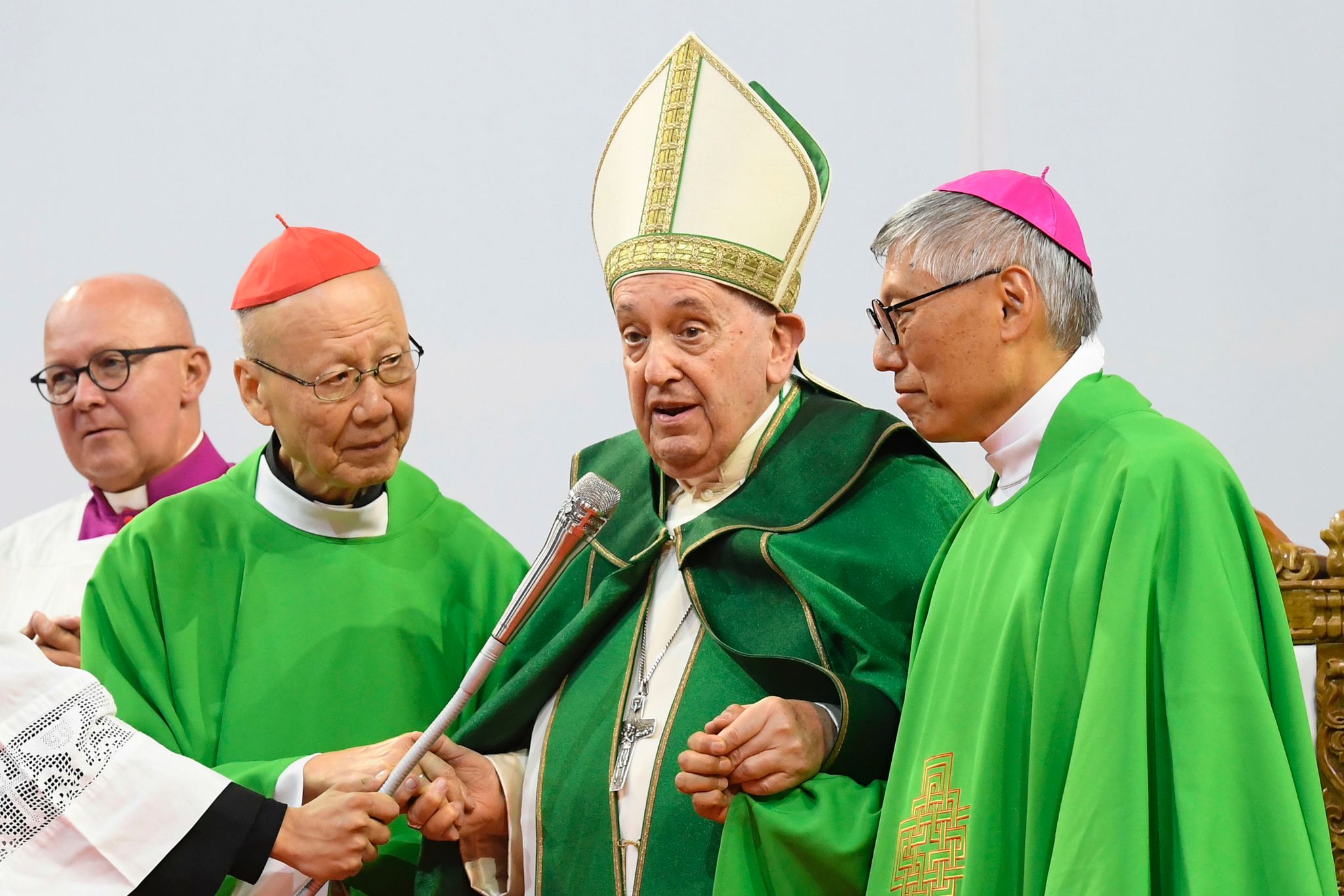

When two people request a blessing, even if their situation as a couple is “irregular,” it will be possible for the ordained minister to consent. However, this gesture of pastoral closeness must avoid any elements that remotely resemble a marriage rite.
- 2027: Akume’s Wife, David Mark’s Daughter Clinch APC Reps Tickets in Benue
- Cubana Chief Priest Claims He Withdrew From APC Ticket Race Before Primaries
- How To Apply for BBNaija Season 11 Auditions as Registration Opens
- BBNaija Season 11 Auditions to Begin May 22 in Lagos, Abuja, Enugu
- Kizz Daniel Announces 7 Job Vacancies at Flyboy INC as He Rebuilds Record Label
This is what is stated the Declaration “Fiducia supplicans” on the pastoral meaning of blessings, published by the Dicastery for the Doctrine of the Faith and approved by Pope Francis.
The document explores the theme of blessings, distinguishing between ritual and liturgical ones, and spontaneous ones more akin to signs of popular devotion. It is precisely in this second category there is now consideration of the possibility of welcoming even those who do not live according to the norms of Christian moral doctrine but humbly request to be blessed. 23 years have passed since the former “Holy Office” published a Declaration (the last one was in August 2000 with “Dominus Jesus”), a document of such doctrinal importance.
“Fiducia supplicans” begins with the introduction by the prefect, Cardinal Victor Fernandez, who explains that the Declaration considers the “pastoral meaning of blessings,” allowing “a broadening and enrichment of the classical understanding” through a theological reflection “based on the pastoral vision of Pope Francis.”
READ ALSO
- 2027: Akume’s Wife, David Mark’s Daughter Clinch APC Reps Tickets in Benue
- Cubana Chief Priest Claims He Withdrew From APC Ticket Race Before Primaries
- How To Apply for BBNaija Season 11 Auditions as Registration Opens
- BBNaija Season 11 Auditions to Begin May 22 in Lagos, Abuja, Enugu
- Kizz Daniel Announces 7 Job Vacancies at Flyboy INC as He Rebuilds Record Label
It is a reflection that “implies a real development from what has been said about blessings up until now, reaching an understanding of the possibility “of blessing couples in irregular situations and same-sex couples without officially validating their status or changing in any way the Church’s perennial teaching on marriage.”
After the first paragraphs (1-3) that recall the previous pronouncement of 2021 that is now further developed and superseded, the Declaration presents the blessing in the Sacrament of Marriage (paragraphs 4-6) stating as inadmissible “rites and prayers that could create confusion between what constitutes marriage” and “what contradicts it,” by avoiding any implication that “something that is not marriage is being recognized as marriage.” It is reiterated that according to the “perennial Catholic doctrine” only sexual relations between a man and a woman in the context of marriage are considered lawful.
A second extensive part of the Declaration (paragraphs 7-30) analyzes the meaning of different blessings, whose recipients are people, objects of worship, and places of life. It is recalled that “from a strictly liturgical point of view,” the blessing requires that what is blessed “be conformed to God’s will, as expressed in the teachings of the Church.”
“When a blessing is invoked on certain human relationships” through a special liturgical rite, the Declaration notes, “it is necessary that what is blessed corresponds with God’s designs written in creation” (par. 11). Therefore, the Church does not have the power to impart a liturgical blessing on irregular or same-sex couples. It is also necessary to avoid the risk of reducing the meaning of blessings to this point of view only, expecting for a simple blessing “the same moral conditions for a simple blessing that are called for in the reception of the sacraments” (par. 12).
After analyzing blessings in Scripture, the Declaration offers a theological-pastoral understanding. Those who ask for a blessing show themselves “to be in need of God’s saving presence” in their lives by expressing “a petition for God’s assistance, a plea to live better” (par. 21). This request should be received and valued “outside of a liturgical framework” when found “in a realm of greater spontaneity and freedom” (par. 23).
When seeing them from the perspective of popular piety, “blessings should be evaluated as acts of devotion.” Those requesting a blessing “should not be required to have prior moral perfection” as a precondition, the Declaration notes.
Exploring this distinction, based on the response of Pope Francis to the dubia published last October that called for discernment on the possibility of “forms of blessing, requested by one or more persons, that do not convey an erroneous conception of marriage” (par. 26), the Declaration affirms that this kind of blessing “is offered to all without requiring anything,” helping people feel that they are still blessed despite their mistakes and that “their heavenly Father continues to will their good and to hope that they will ultimately open themselves to the good” (par. 27).
There are “several occasions when people spontaneously ask for a blessing, whether on pilgrimages, at shrines, or even on the street when they meet a priest and these blessings “are meant for everyone; no one is to be excluded from them” (par. 28).
While it is not appropriate to establish “procedures or rituals” for such cases, the ordained minister may join in the prayer of those persons who “although in a union that cannot be compared in any way to a marriage, desire to entrust themselves to the Lord and his mercy, to invoke his help, and to be guided to a greater understanding of his plan of love and of truth” (par. 30).
The third part of the Declaration (paragraphs 31-41) opens then to the possibility of these blessings that represent a sign for those who “recognizing themselves to be destitute and in need of his help—do not claim a legitimation of their own status, but who beg that all that is true, good, and humanly valid in their lives and their relationships be enriched, healed, and elevated by the presence of the Holy Spirit” (par. 31).
These blessings should not necessarily become the norm, the Statement notes, but entrusted to “a practical discernment in particular circumstances” (par. 37).
Although the couple is blessed but not the union, the Declaration notes that what is blessed is the legitimate relationship between the two people: in “a brief prayer preceding this spontaneous blessing, the ordained minister could ask that the individuals have peace, health, a spirit of patience, dialogue, and mutual assistance—but also God’s light and strength to be able to fulfill his will completely” (par. 38).
Also clarified is that to avoid “any form of confusion or scandal,” that when a couple in an irregular situation or same-sex couples ask for a blessing, it “should never be imparted in concurrence with the ceremonies of a civil union, and not even in connection with them. Nor can it be performed with any clothing, gestures, or words that are proper to a wedding” (par. 39). This kind of blessing “may instead find its place in other contexts, such as a visit to a shrine, a meeting with a priest, a prayer recited in a group, or during a pilgrimage” (par. 40).
In conclusion, the fourth chapter (paragraphs 42-45) recalls that “even when a person’s relationship with God is clouded by sin, he can always ask for a blessing, stretching out his hand to God” and desiring a blessing “can be the possible good in some situations” (par. 43).



![Pallbearers carry the coffin of Pope Francis during his funeral at the Vatican [Gregorio Borgia/AP]](https://bonanaija.com.ng/wp-content/uploads/2025/04/pope-francis-funeral-400x240.webp)
![Pallbearers carry the coffin of Pope Francis during his funeral at the Vatican [Gregorio Borgia/AP]](https://bonanaija.com.ng/wp-content/uploads/2025/04/pope-francis-funeral-80x80.webp)