
News
ERA OF RIGHT TAX REVENUE UTILISATION IN AFRICA BECKONS

By Kelechi Okoronkwo
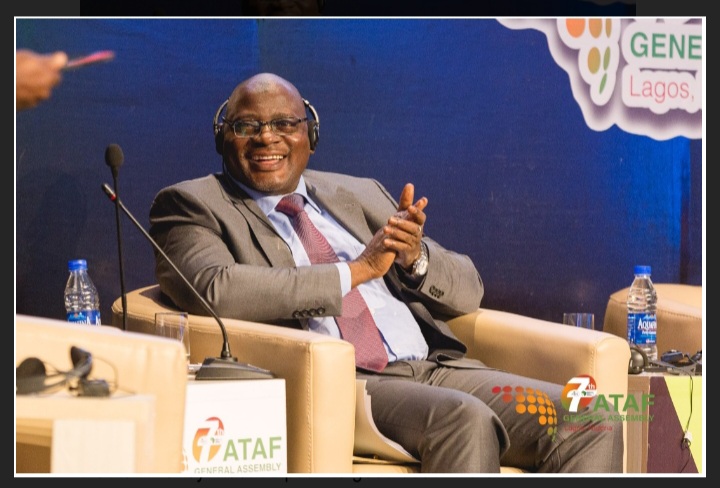
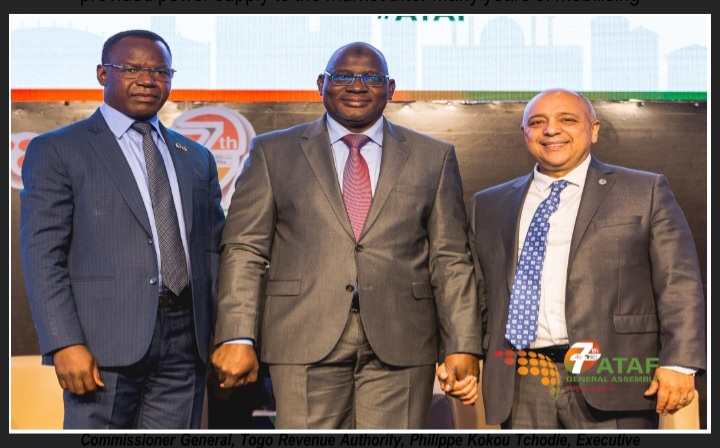
A major take-away from the just concluded Seventh General Assembly of the African Tax Administration Forum (ATAF) which held in Lagos, Nigeria, from October 31 to November 4, 2022 is that tax money must be put into good use if more tax revenue is to be generated. Heads of tax agencies from 42 African countries and more than 500 other participants, comprising of 380 registered participants who attended physically, 100 registered participants who participated virtually and about 65 participants who were members of dignitaries’ entourage, were welcomed in Lagos with that simple statement of fact; and that statement reverberated in all discussions throughout the five-day continental tax engagement.
Over the years, taxmen have avoided this sore-part of tax administration. In most tax jurisdictions in Africa, the constitutional responsibility of taxmen ends with the generation or collection of tax revenue. The utilisation of the revenue is left for the government to decide. As a result, taxmen did not even attempt to remind the government of the social contract between the taxpayer and the government.

The subsisting social contract is that while taxation represents a compulsory transfer of wealth from private citizens to the state, it is publicly desirable only if tax revenue is consistently translated in improvements in publicly provided goods and services, and broader improvements in the quality of governance. In other words, while it is the obligation of the citizens to pay taxes to the government, it is the responsibility of the government to utilise the tax revenue properly to provide the citizens with needed services and infrastructure.
Taxmen literally endured confrontations by taxpayers who always demanded evidence of tax revenue utilisation. Reports from field show that taxmen often faced stiff resistance from taxpayers during tax compliance drives. As a result, tax administrators lose revenues; and in some cases, get humiliated or even manhandled by angry taxpayers who demanded value for money paid as taxes. The outcome statement of the Chartered Institute of Taxation of Nigeria (CITN) in its collaborative meeting with the Kwara State University (KWASU) in August 2022 noted that the major cause of low tax compliance in Nigeria was ‘Trust Deficit’ of the taxpayer for the government. A taxman, during the ATAF conference, shared his experience during a tax drive in one market his country’s capital city. The moment the traders identified the group of taxmen who were on tax drive to some offices in the market, the traders mobilised and chased the taxmen out of the market, saying that the government neither constructed access road to the market nor provided power supply to the market after many years of mobilising revenue from the market.
In Nigeria, the Executive Chairman of the Federal Inland Revenue Service (FIRS) has been championing calls for public office holders to ensure right utilisation of the taxpayers’ money. Nami had observed that taxmen in Nigeria faced resistance from taxpayers because Government at various levels are not doing enough to produce evidence of good use of the taxpayers money. He then started open campaign for judicious and effective deployment of tax revenue. Nami took the call to the ATAF General Assembly in Lagos. In his welcome remarks, Nami urged heads of tax administrations in Africa never to shy away from highlighting the strong nexus between improved tax revenue collection and improved utilisation of the tax revenue. In Nigeria for instance, while available records show that the government at some levels, is making effort to provide the taxpayers with basic social amenities, it is also true that the culture of right tax utilisation needs to permeate the system such that it becomes anathema for any public office holder to divert or misuse the taxpayers’ money. This is the central theme of Nami’s effervescent messages on tax revenue utilisation.
Interestingly, the theme of the ATAF conference was “Rethinking Revenue Strategies: The Human Face of Taxation”. Nami seized the opportunity to further escalate his thoughts to his colleagues, that giving a human face to taxation involves making the tax money work for the taxpayers, insisting that governments across Africa must begin to rethink governance, engender public confidence and trust in government by providing value for taxpayers’ money in line with the responsibilities of governments under the social contract they have with citizens. He added that it was imperative for African tax administrators to mobilise and speak with one voice as a regional bloc on global tax issues for their collective interests.
“The fiscal social contract which hinges on the willingness of the citizens to pay tax in return for the provision of public service, is a clarion call on the government at all levels in Africa to rethink governance.
“In my view, if we must transform the tax system and enhance revenue collection in Africa, there is the need for the government at all levels to engender public confidence and trust in government by providing value for taxpayers’ money,” Nami said.
Nami also stated that governments should reconsider how projects are reported in the public space, with such reports communicating to convey the idea that taxpayers’ money’s is used to fund infrastructural projects.
Also, Lagos State governor Babajide Sanwo-Olu who was represented by chairman of the Lagos State Internal Revenue Service (LIRS) Mr. Hamzat Ayodele Subair, in the same vein said that there was the need to give taxation a human face, by implementing projects with taxpayers’ moneys that impact the lives of the citizens. Taking Lagos state for instance, Sanwo-Olu said there can be no development without funding. And in return, the Lagos State Government has given a human face to taxation by providing the taxpayers with their basic needs.
“There is no development without funding. We have amongst others, embarked on major transformational infrastructure projects cutting across transport, health, education, agriculture, and technology amongst others.
“These major infrastructural interventions are designed to improve the quality of life of our citizens and re-engineer economic growth and development trajectory with improved productivity of our citizenry, which invariably improves our tax generating abilities. In a bid to save the human face of taxation, communication and feedback from the taxpayer are of paramount importance,” Mr. Subair noted.
Similarly, in his remarks, the Executive Secretary of the African Tax Administration Forum, Mr. Logan Wort noted that a critical component of rethinking Domestic Revenue Mobilisation is to ensure that the government has an impact on the lives of citizens.
“While we consider strategies or frameworks within which to enhance Domestic Resource Mobilization on the continent, we must always put into perspective its primary objective—being the impact on people’s lives as reflected by ATAF’s mandate in the new decade which is to serve the higher purpose of enabling and assisting African governments to mobilize their own domestic resources through taxation in order to build states that foster economic growth and social development in the interest and wellbeing of all their citizens.
“This mandate, especially the latter part, is one we all share in various capacities across our jurisdictions, and one that must drive our Domestic Resource Mobilization objectives”, Mr Wort said.
Nami’s call for right tax revenue utilisation by African governments dominated discussions throughout the conference; and became a profound peg for rethinking taxation strategies in Africa. With the dramatic acceptance of Nami’s speech amongst the tax administrators, as evidenced by various reactions of participants in the tax conference, there is already a silver lining in the cloud; and one could be optimistic that African Governments would heed these calls for effective tax revenue utilisation; which will in turn cause upshoot in tax compliance and revenue mobilisation in Africa.
Kelechi Okoronkwo is a Media Support Staff of the Executive Chairman, FIRS.



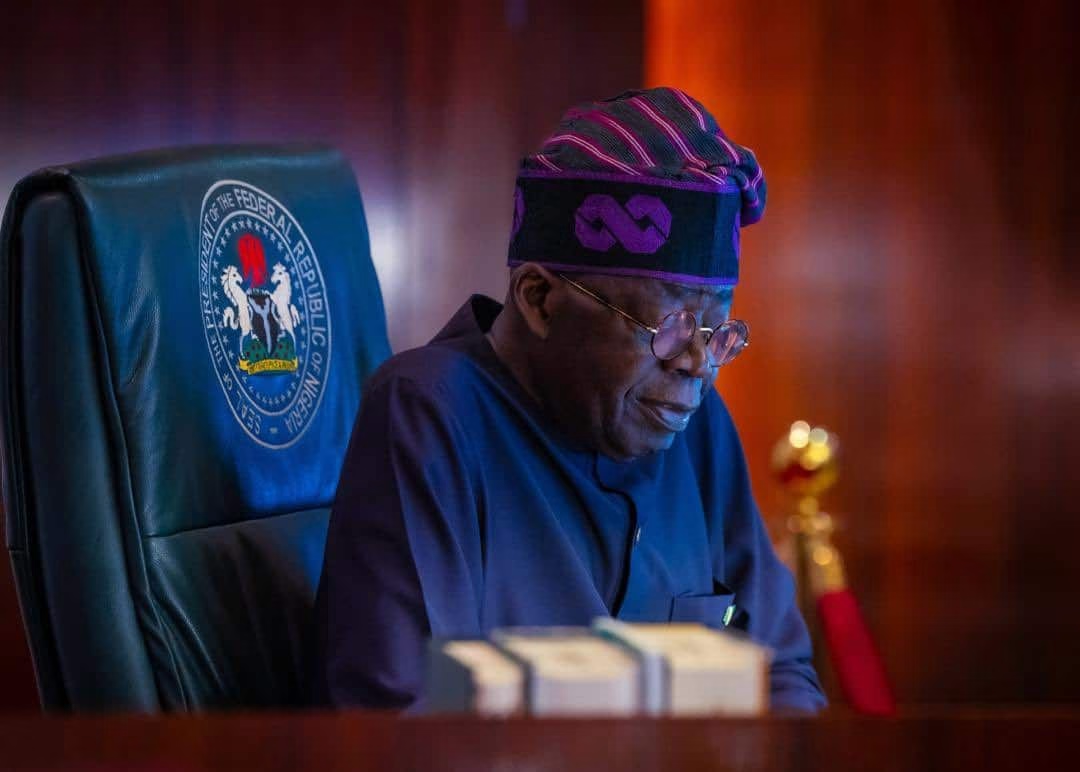
The Federal Government has officially banned recipients of honorary degrees from using the “Dr” title as a prefix to their names, in a move aimed at curbing the misuse and politicisation of academic honours.
The directive was announced on Wednesday by the Minister of Education, Tunji Alausa, following a Federal Executive Council (FEC) meeting held at the Presidential Villa in Abuja.
Speaking to State House correspondents, Alausa expressed concern over what he described as the growing abuse of honorary doctorate awards across the country.
“The recent trend we’ve seen with the award of honorary degrees has revealed a growing abuse and politicisation of this academic privilege,” he said.
“We’ve seen awards being used for political patronage, for financial gain, as well as the conferral of awards on serving public officials, which, as part of the ethics of honorary degree awards, should not happen.”
New Directive Takes Effect
Under the new policy, individuals conferred with honorary doctorate degrees will no longer be allowed to use “Dr” as a prefix in any official, academic, or professional setting.
Instead, recipients are required to clearly state the full honorary designation after their names—for example, John Doe, Honorary Doctor of Letters (D.Litt)—rather than adopting the “Dr” title.
The government clarified that only individuals who have earned doctoral degrees through academic study or are certified medical practitioners will retain the legal and professional right to use the “Dr” prefix.
Move to Restore Academic Integrity
The decision is part of broader efforts by the Federal Government to restore credibility and integrity to Nigeria’s education system, particularly in the awarding of honorary degrees.
Education stakeholders have long raised concerns over the proliferation of honorary doctorate awards, with some institutions accused of granting such honours without strict academic or ethical standards.
Observers say the new regulation is expected to discourage the commercialisation of honorary degrees and reinforce the distinction between earned academic qualifications and ceremonial recognitions.
Follow BONA NAIJA for more

A luxury Mercedes-Benz G-Class G63 AMG was involved in a late-night crash on a major highway in Abuja, killing six cows and sparking renewed concerns over road safety and enforcement of grazing laws in the Federal Capital Territory.
The incident occurred around 8 p.m. on Monday,
according to eyewitness accounts, when the high-speed SUV collided with a herd of cows that had reportedly strayed onto the roadway. A video circulating on social media shows the aftermath, with the white cows lying across the dark highway as traffic officials worked to manage the situation.
As of the time of filing this report, there were no confirmed injuries to the driver or any passengers in the vehicle. Unverified reports on social media suggested that the SUV sustained only minor damage despite the severity of the collision.
The accident has reignited debates over the continued presence of cattle on major roads in Abuja, despite the 2017 ban on open grazing introduced by the Federal Capital Territory Administration. The policy was designed to curb frequent clashes between herders and communities, as well as prevent traffic disruptions and accidents caused by roaming livestock.
Residents and road users have repeatedly raised concerns about the enforcement of the grazing ban, noting that cows are still often seen along highways and within urban areas of the capital. Monday night’s crash is the latest in a series of such incidents, highlighting ongoing gaps in regulation and compliance.
Authorities are yet to release an official statement on the crash or confirm whether any action will be taken regarding the presence of the cattle on the highway.
WATCH VIDEO
Follow BONA NAIJA for more

Leading Nigerian fintech company Moniepoint has announced six new job openings across Abuja and several states in the North Central region, expanding its workforce in compliance, technical operations, sales, and security management.
The vacancies cut across multiple departments, reflecting the company’s continued growth in agent banking, SME solutions, and digital financial infrastructure services.
Available Positions
Field Risk & Internal Control Officer (North Central)
- Team: Compliance
- Location: FCT, Nigeria
The role focuses on monitoring operational risks, enforcing internal control standards, and ensuring compliance across field operations in the region.
Apply Here
Hardware Engineer
- Team: Advanced Technical Operations
- Location: FCT, Nigeria
Successful candidates will handle hardware installation, maintenance, troubleshooting, and technical support for field operations.
Apply Here
Implementation Officer (North Central)
- Team: Moniebook Business Management Tools
- Locations: Benue, Plateau, FCT
This role involves onboarding merchants and ensuring smooth deployment of Moniepoint’s business tools across assigned regions.
Apply Here
Inbound Sales Officer (Abuja)
- Team: Moniebook Business Management Tools
- Location: FCT, Nigeria
The position focuses on handling inbound customer inquiries, converting leads, and supporting sales growth for Moniepoint business solutions.
Apply Here
Regional Lead, Corporate Security (North)
- Team: Moniepoint MFB
- Locations: FCT, Kano
The role oversees corporate security operations, risk prevention strategies, and protection of company assets across northern Nigeria.
Apply Here
Regional Lead, Field Risk & Internal Control (North)
- Team: Compliance
- Location: FCT, Nigeria
This leadership position is responsible for coordinating regional risk management teams and strengthening internal control systems.
Apply Here
The hiring drive comes as fintech companies in Nigeria continue to expand their physical and digital operations across underserved regions, particularly in agent banking and SME support services.
Moniepoint, one of the fastest-growing fintech firms in the country, has steadily increased recruitment in technical, compliance, and field operations roles over the past year.
With these openings, Moniepoint is strengthening its presence in Abuja and northern Nigeria while scaling its financial services infrastructure across the country.
Follow BONA NAIJA for more

Comments by Tosin Eniolorunda, CEO of Moniepoint, have sparked a heated debate online after he questioned the quality of Nigeria’s talent pool while discussing his company’s hiring challenges.
Speaking at the The Platform Nigeria on May 1, Eniolorunda said the fintech firm had advertised over 500 vacancies since 2024 but struggled to find qualified local candidates. He revealed that by 2025, the company reversed its local-only hiring policy due to the shortage.
“I used to feel Nigerians are really bright… but we are still struggling to find Nigerians to fill those roles. They don’t meet global standards,” he said, attributing the gap to factors such as social media distractions, cybercrime, hookup culture, and weaknesses in the education system.
Backlash and Counterarguments
His remarks triggered swift backlash from Nigerians, particularly within the tech community, with many accusing local companies of failing to invest in talent development.
Critics argued that unlike global firms, Nigerian tech companies rarely offer structured, paid internship programs or training pipelines to groom young professionals. Some pointed to examples of international companies like Oracle Corporation, where internships and early talent programs serve as entry points into full-time roles.
Others shared personal experiences of being rejected by local firms despite strong resumes, while noting that Nigerian professionals continue to secure roles in global companies such as Amazon.
A recurring sentiment online was that many Nigerian companies demand “global-standard talent” but are unwilling to offer competitive compensation or career development opportunities.
Industry Perspective
Supporters of Eniolorunda’s stance, however, pointed to the realities of scaling a fast-growing fintech company in a competitive global market. They cited brain drain, limited specialized skills, and increasing demand for top-tier expertise as genuine challenges facing Nigerian startups.
Analysts say the controversy highlights a broader issue within Nigeria’s tech ecosystem balancing expectations between employers and job seekers, while addressing gaps in education, training, and remuneration.
The debate mirrors ongoing tensions around talent development, compensation, and hiring practices in Nigeria’s fast-evolving tech sector.
As companies expand and compete globally, the question of how to build, retain, and fairly reward talent is likely to remain a central issue.
i
Follow BONA NAIJA for more

A Nigerian soldier has allegedly assaulted a journalist, Fakoyejo Olalekan, during a traffic control operation in Lagos State, triggering widespread public condemnation after video footage of the incident surfaced online.
The clash occurred on May 2 near Pleasant Event Centre in Ikeja, where personnel of the Nigerian Army were reportedly directing heavy traffic.
According to eyewitness accounts, the altercation began after Fakoyejo remarked to passengers that a soldier’s handling of a motorcyclist had caused an unnecessary delay. The comment allegedly angered one of the soldiers, who ordered everyone out of the vehicle.
The situation escalated when the soldier reportedly slapped and shoved the journalist, and briefly reached for a piece of wood before bystanders intervened to prevent further escalation.
Video clips circulating on social media show at least two soldiers involved in the confrontation. During the incident, Fakoyejo’s phone screen was also seen shattered on the pavement. No serious injuries were reported.
The footage has since triggered widespread criticism online, with many users calling for accountability and questioning the conduct of military personnel during civilian traffic enforcement duties.
As of May 4, the Nigerian Army had yet to issue an official response despite being tagged in multiple public complaints and posts about the incident.
Follow BONA NAIJA for more

Nigeria Bans Honorary Degree Holders from Using ‘Dr’ Title

Mercedes G63 Kills Six Cows in Abuja Highway Crash

Saka Sends Arsenal to First Champions League Final Since 2006

Shaibu Calls for Stronger Inter-Agency Collaboration as NIS Produces Nigeria’s First Certified Marathon Medical Director

Job Vancancy: Moniepoint Job Vacancies in Abuja and North Central Nigeria

Lookman Spotted in London Ahead of Arsenal vs Atletico UCL Showdown

2027 Bombshell: Ohanaeze Tells Peter Obi to Step Down for Tinubu

Burna Boy Splashes $100,000 on 6uff, Odumodublvck at Lagos Club Night

Nigerians Slam Moniepoint CEO Over ‘Talent Quality’ Remarks Amid Hiring Debate

Outrage as Soldier Assaults Journalist Over Traffic Dispute in Lagos

News Flash: Court Suspends Secondus As PDP National Chairman, Member

2019 Presidency: Donald Duke’s Running Mate Quites Race Allegedly joins Atiku

Falana threaten to sue Kachikwu over $60bn oil revenue loss

#BONANAIJATV: Exclusive interview with OMPAN National President Comr Emeh James Anyalekwa #ompanowerri2018

Video : Phyno – Agu
Philippines president, Rodrigo Duterte brags about the size of his manhood

Video: Burna Boy – “Dangote”

VIDEO: Becca – Magic ft. Ycee

VIDEO: Patoranking x Davido – Confirm

TV personality Zainab Balogun reveals how she met her hubby and how his kids reaction when she told them she was going to be their new mum

Video: Screening of Former Governor of Kaduna State, Elrufai

OLISAE Rolls Out Video for New Song “SAMBELE” featuring Slowdog

Video: Dino Melaye mocks Tinubu during the PDP rally In Delta

Video: Shettima & I Will Not Abuse Each Other Like Obasanjo & Atiku – Bola Tinubu

Watch Sabinus’ Comedy on Tinubu, Peter Obi, other presidential candidates

Video: Buju feat. Burna Boy – Lenu (Remix)

VIDEO: Sammie Okposo – Nobody Can

VIDEO: Falz – Bop Daddy ft. Ms Banks

Watch Diane Russet’s Short Film “Bayi”

Video: Acoustic Performance of Patoranking’s “So Nice”


-
 Jobs3 weeks ago
Germany Embassy Abuja Announces Job Vacancy
-

 Jobs4 weeks ago
EU Invites Nigerian Graduates to Apply for 2026 Funded Traineeship in Abuja
-
 Jobs3 weeks ago
Research Interviewers Job: Jhpiego Hiring Across 36 States & FCT
-
 News3 weeks ago
Supreme Court Dismisses David Mark’s Application, Deepening ADC Leadership Crisis Ahead of 2027 Polls
-

 Music Video3 weeks ago
Fally Ipupa & Wizkid Ignite Charts with ‘JAM’ Video from XX Album
-
 Politics2 weeks ago
2027: Obi, Kwankwaso Supporters Launch ‘OK Movement’ Ahead of ADC Presidential Primary
-
 News2 weeks ago
Captured Boko Haram Suspect Alleges Links to Senior Military Figure in Viral Interrogation Video
-

 Politics3 weeks ago
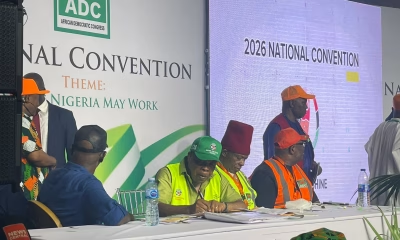
ADC National Convention: Security Beefed Up as 3,000 Delegates Elect New NWC
-

 Sports3 weeks ago
Champions League Shockers: Real Madrid, Liverpool Out as 2026 Semi-Final Lineup Emerges
-
 Politics3 weeks ago
ADC Concludes Convention, Ratifies Mark-Led NWC Ahead of 2027 Push